
The complete guide
How to Choose a Kids Instant Print Camera That Actually Gets Used
The problem with digital photos and children
Hand a child a phone and they will take two hundred pictures in an hour. Most of them are of the carpet, the ceiling and one ear of the family dog. A few are genuinely good. Then the phone goes back in a pocket and none of those pictures are ever seen again.
That is the gap an instant print camera for children fills. It makes photography physical again. Your child takes the picture, waits a few seconds, and holds the result. Suddenly the photo is a thing. It can be stuck on a wall, folded into a lunchbox note, given to a grandparent or coloured in with felt tips. Children treat pictures differently when they can touch them.
There is a second benefit that parents notice fairly quickly. A camera that prints slows a child down. They start to think before they press the shutter, because there is an output at the end. That is a small lesson in attention, and it comes for free.
How thermal printing works
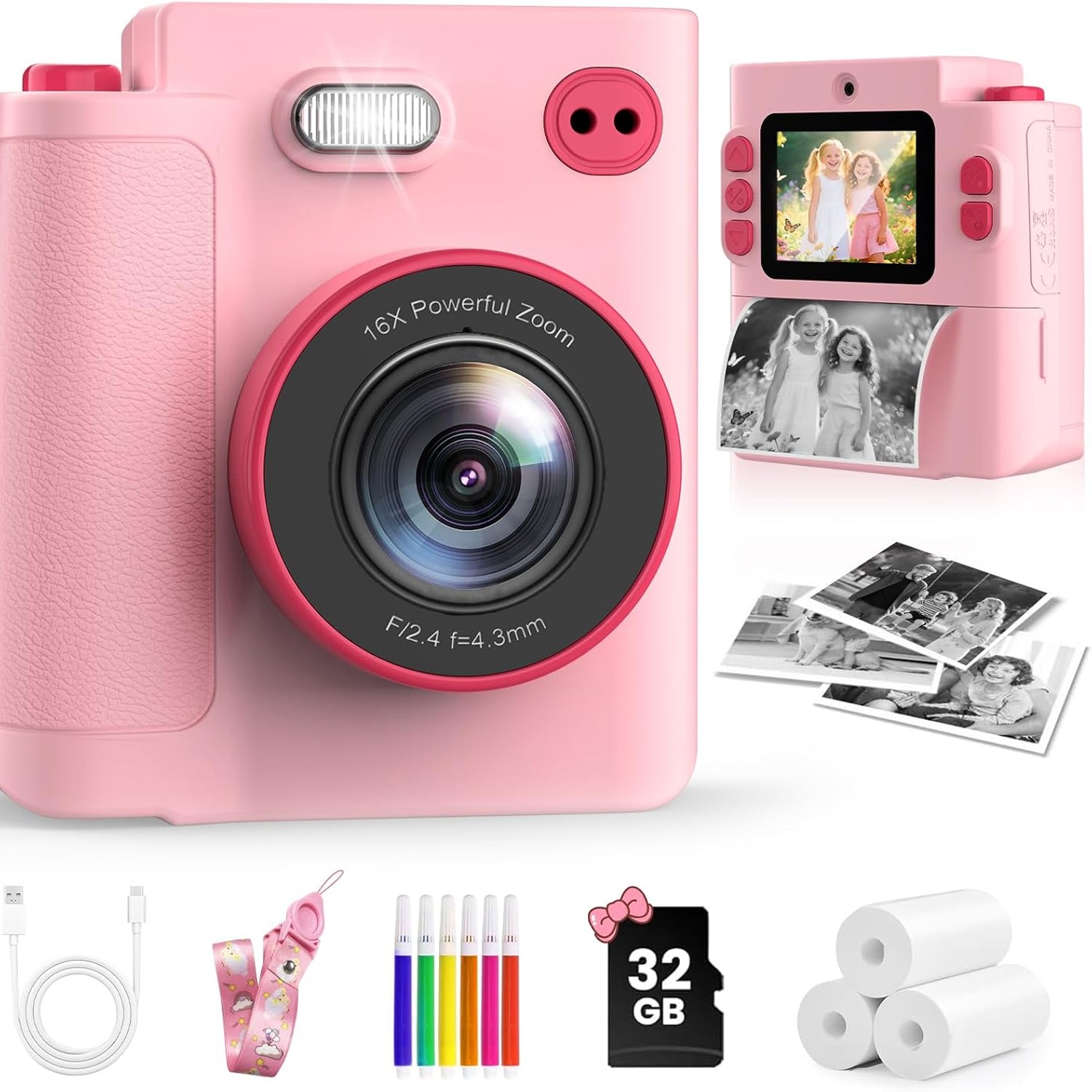
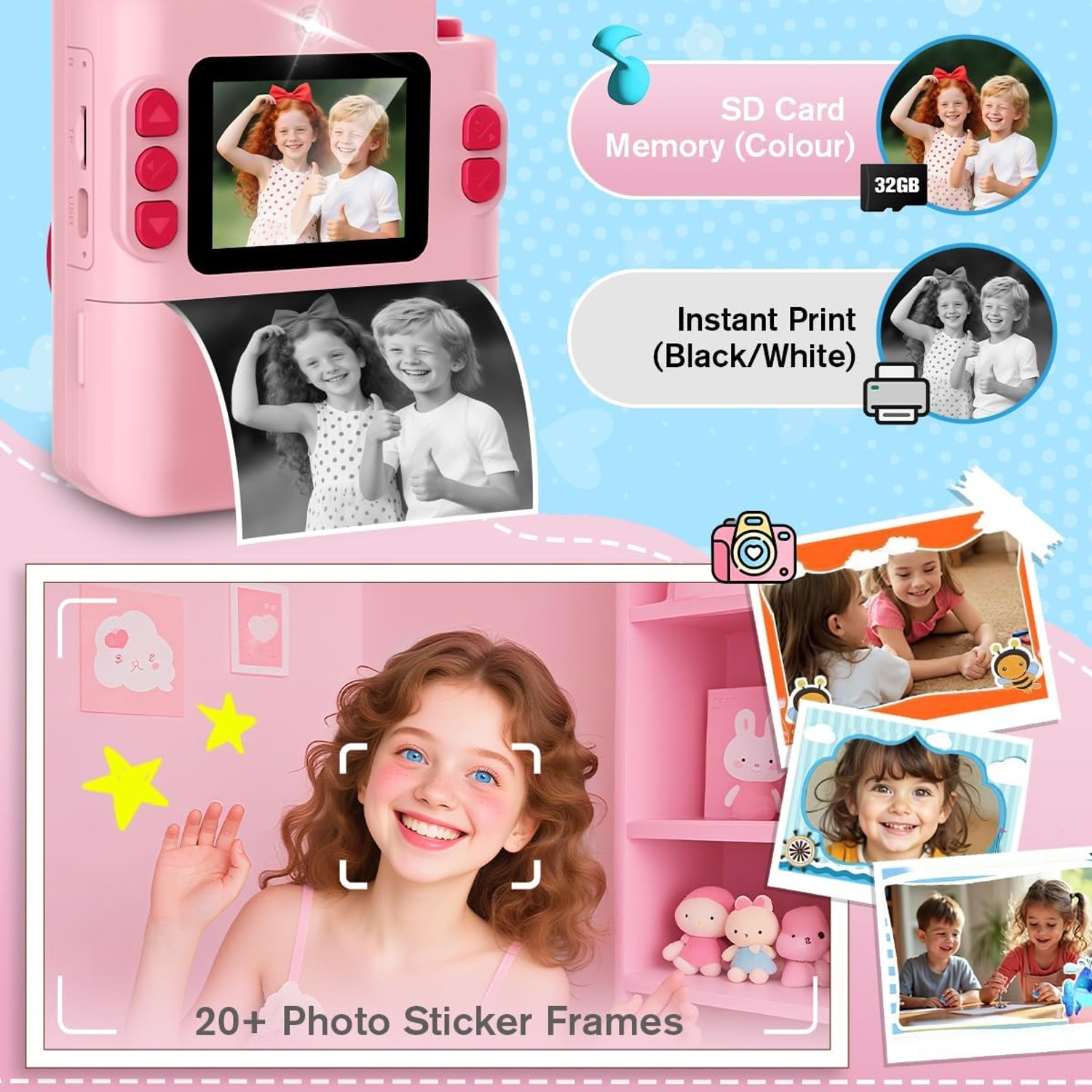
The printer inside this camera is a thermal printer, the same basic technology used in supermarket receipts. The paper is coated with a layer that darkens when it is heated. A row of tiny heating elements presses against the paper and burns the image into it line by line.
The practical result is that there is no ink. No cartridge, no toner, no refill kits that cost more than the camera. You buy rolls of thermal paper and that is the whole running cost. For a child who shoots constantly, this is the difference between a camera that gets used and a camera that sits in a drawer because the film is too expensive to waste.
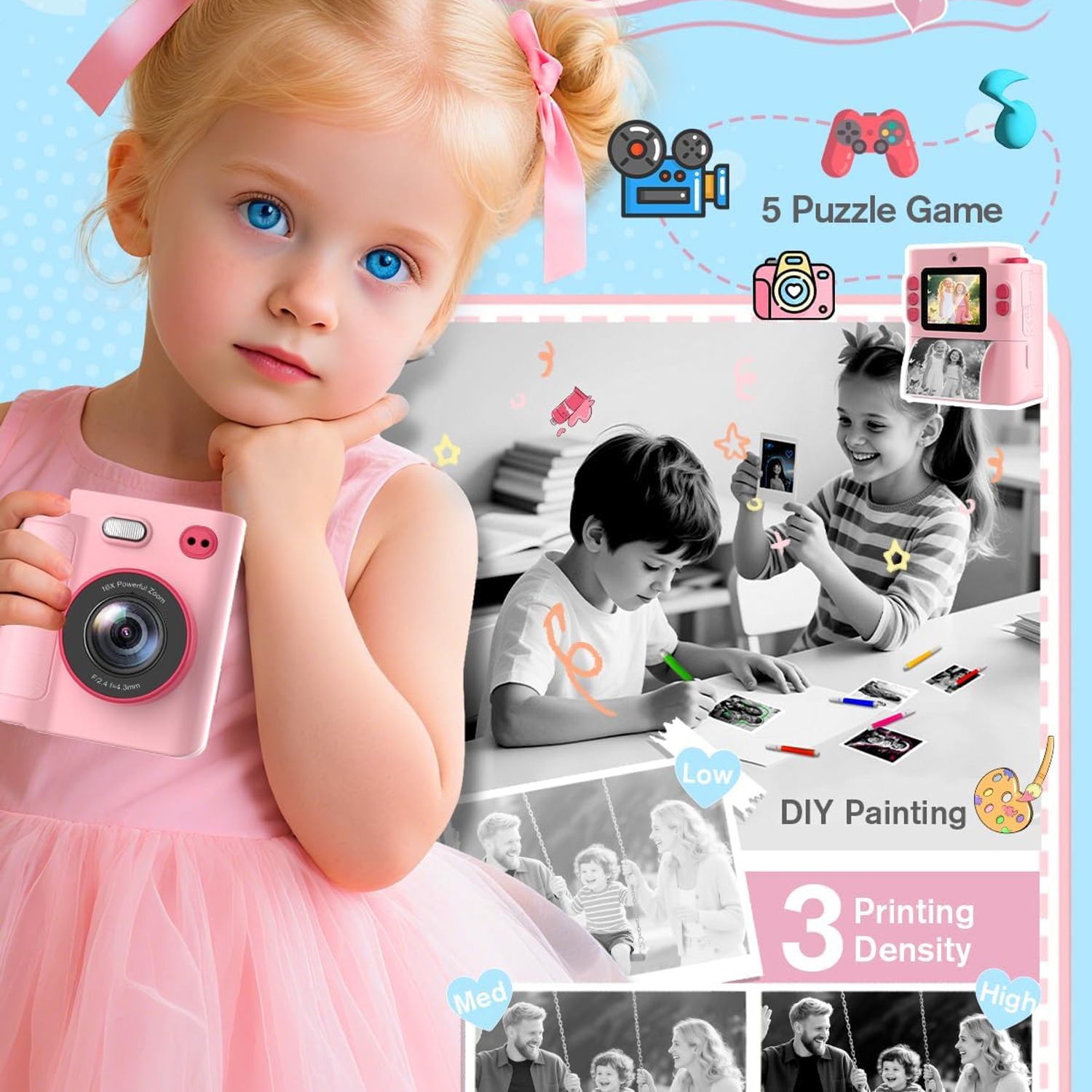
The trade-off is that thermal prints are monochrome, in a greyscale or dot-matrix style depending on the setting. They are also small and soft rather than crisp. If you are expecting the look of a photo lab print, you will be disappointed. If you are expecting something a seven-year-old can hold, draw on and stick in a notebook, you will be happy. Plenty of children prefer the greyscale look, because it gives them something to colour.
One more thing worth knowing. Thermal paper reacts to heat and light forever, not just inside the printer. A print left on a sunny windowsill or near a radiator will darken over months. Keep the ones that matter in a book or a drawer, and lean on the digital copies for anything you want to keep sharp.
What else is inside the camera
A print function alone would get boring. This one is a reasonably complete little digital camera as well.
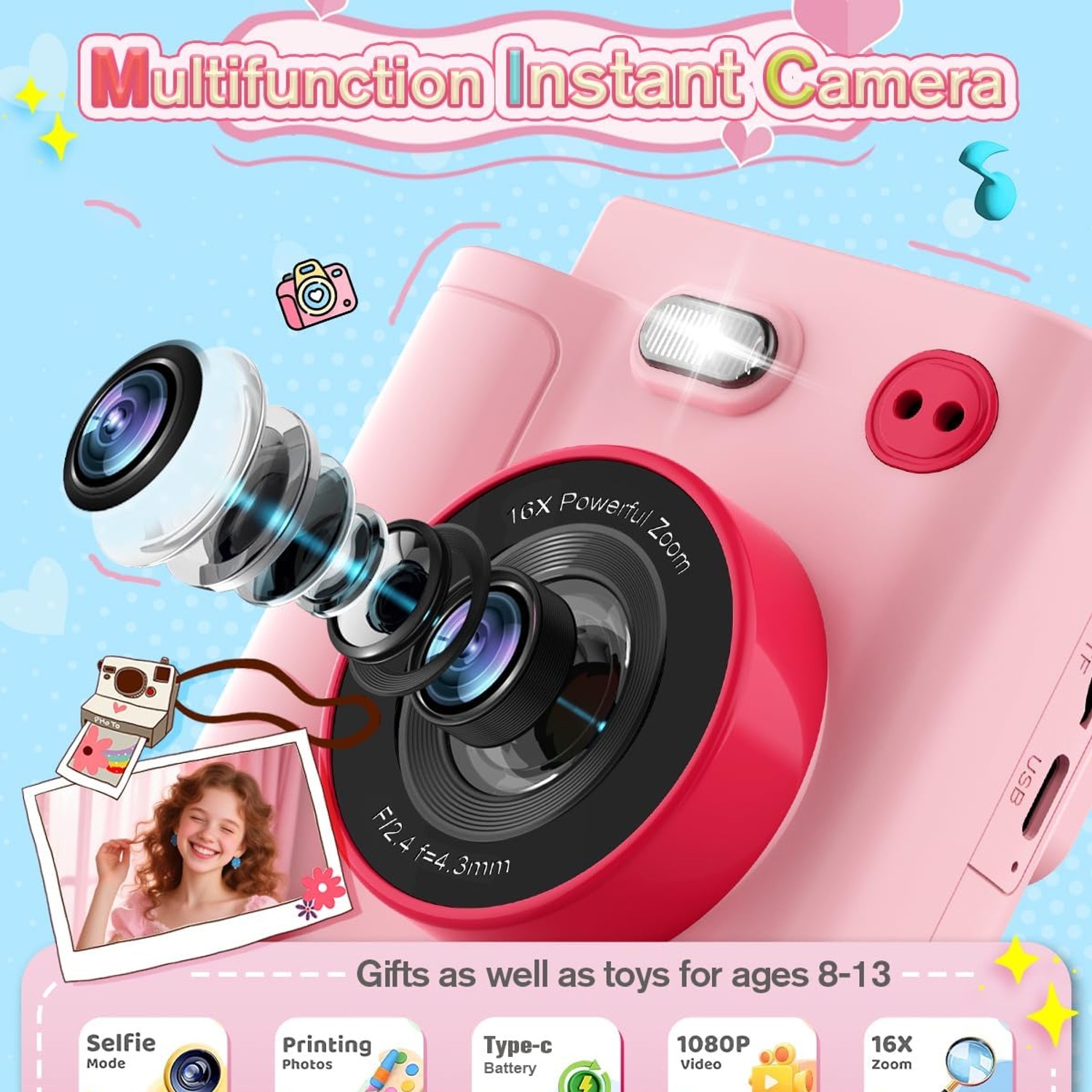
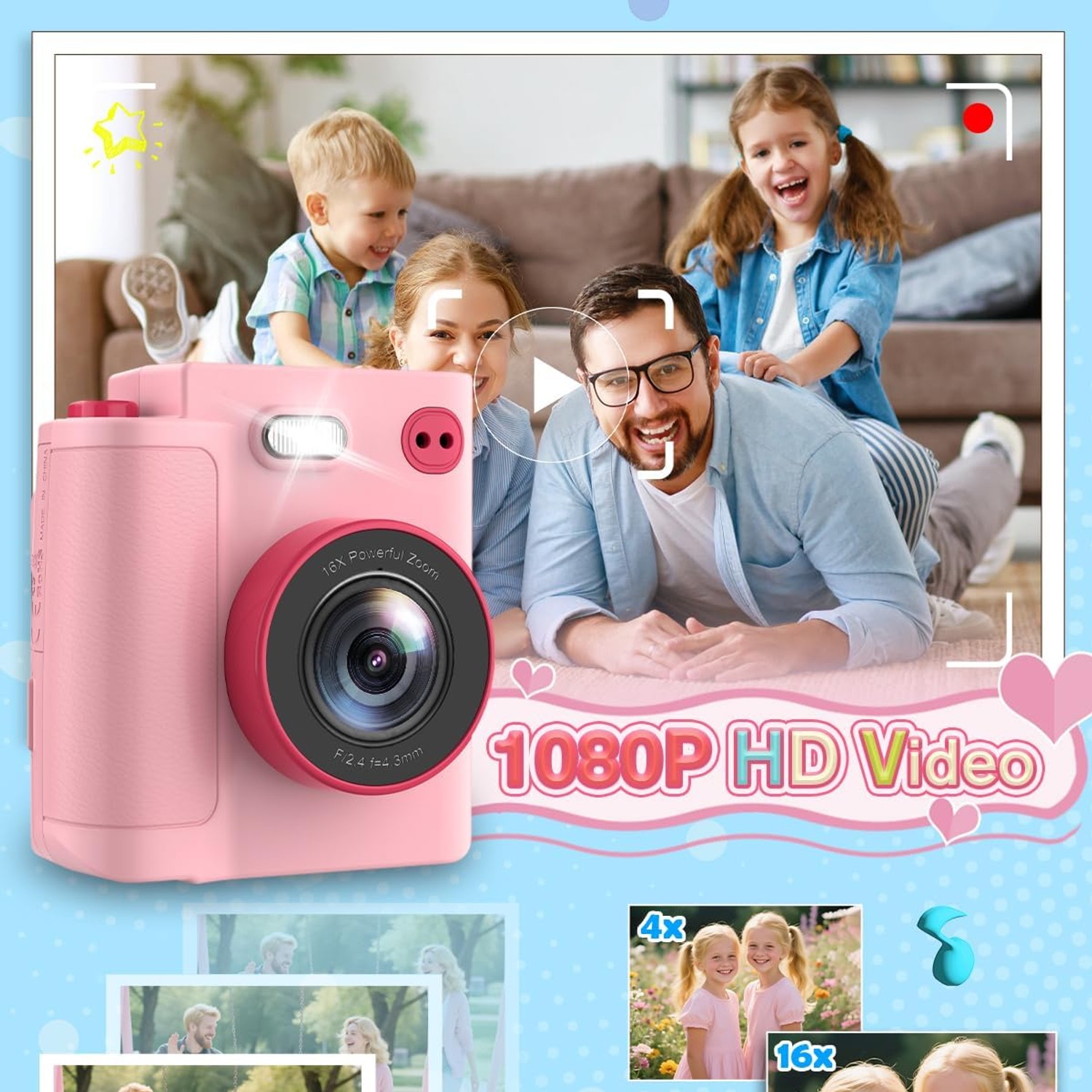
Video records at 1080p and 30 FPS, which is enough for home clips, school holiday footage and the sort of narrated tour of a bedroom that every child makes at least once. There is a 16x digital zoom, though digital zoom crops into the picture rather than magnifying it optically, so pictures lose detail as you push it. Worth teaching early that walking closer beats zooming.
The LED fill light helps indoors, burst mode catches moving subjects, and time-lapse turns something slow into something watchable. The time-lapse feature pairs nicely with the tripod mount on the body. A cheap tabletop tripod plus a time-lapse of a cake being iced or a Lego build coming together keeps a child busy for an afternoon.
There is a 2-inch colour LCD on the back that doubles as the viewfinder. For young photographers this matters more than you might expect. A screen gives instant feedback, and a child learns framing far faster when they can see what the lens sees.
Behind all of it sits a 1300 mAh lithium polymer rechargeable battery with a listed average life of about 4 hours. Charging is over Micro USB, and the same cable moves pictures across to computers, smartphones and tablets.
Who it suits
This is a camera for children who want to make things, not just record them. If your child already draws, keeps a scrapbook, decorates their bedroom door or writes notes to people, the prints give them raw material.
It also works well for travel and holidays. A printed photo taped into a travel journal each evening turns a trip into a project. Children who struggle to sit still at the end of a long day will often settle down with a camera full of the day's pictures and a pen.
It is less suited to an older child who wants genuine image quality, or to a teenager who already has a decent phone camera. For them, the novelty of a toy-grade thermal print wears off. The sweet spot is a child who is old enough to work simple buttons but young enough that holding a photo still feels like a small piece of magic.
Parents hunting for the best kids instant print camera as a first camera usually land here for the same reason. The barrier to taking a picture is low, and the reward is immediate.
How to choose between models
A few things separate a good children's print camera from a frustrating one.
Check the screen. A 2-inch colour LCD, like the one on this model, is about the minimum for comfortable framing. Anything smaller and children end up guessing.
Check the battery and how it charges. A built-in rechargeable cell beats a model that eats AAA batteries, both for cost and for sanity. Look at the stated runtime and assume real-world use will come in a little lower once the printer and screen are working hard.
Check what paper the printer takes, and confirm you can buy that paper easily where you live. A camera that needs an unusual roll size is a camera that will eventually stop printing.
Check whether digital copies are saved as well as printed. A print-only camera means the good shots only exist on fragile paper. This one stores photos digitally and transfers over Micro USB, which is the setup you want.
Finally, be honest about durability. Children's cameras are plastic and this one is not water resistant. A soft pouch, a wrist strap and a rule about pools will extend its life more than any specification on the box.
Care and keeping it going
The basics are simple. Wipe it with a dry cloth. Keep it dry and out of the sun. Do not leave it in a hot car, because heat is bad for both the battery and the paper.
Charge it with a standard USB plug rather than a high-output phone fast charger. Small batteries last longer on a gentle charge. If the camera is going to sit unused for a while, top it up every few weeks rather than storing it flat.
Buy spare paper rolls before you need them. The most common reason one of these cameras goes quiet is that the last roll ran out on a Saturday and nobody got around to replacing it. Two spares in the drawer solves that.
Store the prints sensibly. A cheap photo album or a shoebox keeps them out of the light and stops them getting creased. Scan or photograph the ones you really care about, or just pull the digital original off the memory card.
The short version
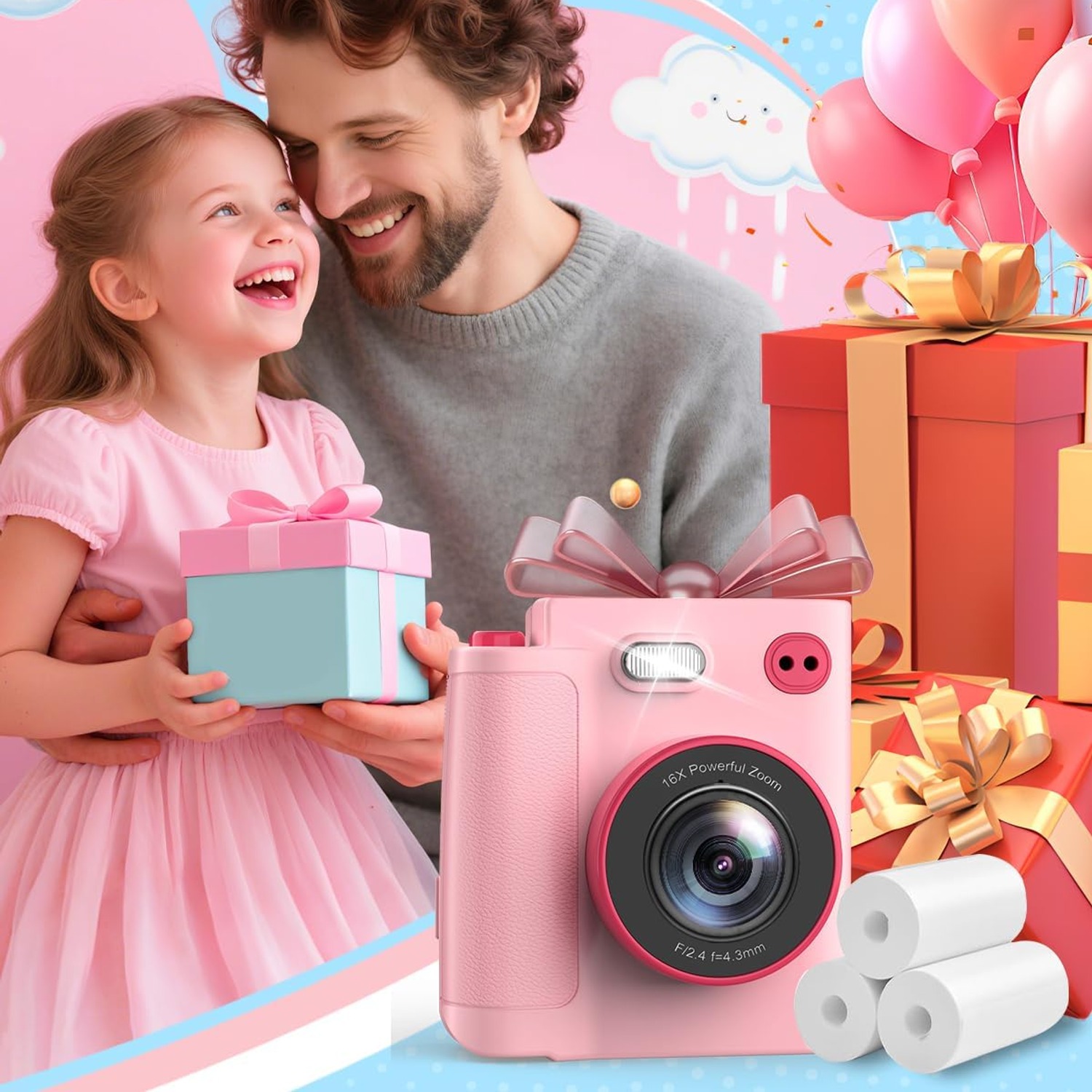
This is a pink children's camera that prints pictures with heat instead of ink, shoots 1080p video at 30 FPS, has a 2-inch colour LCD, 16x digital zoom, LED fill light, burst mode and time-lapse, and runs on a 1300 mAh rechargeable battery rated at around 4 hours. It has a tripod mount, connects over Micro USB, and it is not water resistant.
Buy it if you want your child to end up with photos they can hold, colour and give away. Skip it if you are after image quality that would stand up on a large screen. For its intended job, which is getting a child excited about taking pictures and giving them something real at the end, it does well.