
The complete guide
How to Choose a 3 Channel Dash Cam, A Practical Buyer's Guide
The problem a three camera setup actually solves
Most people buy their first dash cam after something happens. Someone reverses into the door at the shops and leaves. A driver merges without looking and then tells a very different story to the insurer. A passenger makes a complaint that has no basis in fact. In each case there is a gap between what happened and what can be proved, and that gap is expensive.
A single forward camera closes part of that gap. It is good for head-on incidents and for red light disputes. But a huge share of real world claims involve something the front lens never sees. Rear end collisions happen behind you. Car park damage often happens at the back corner. And anything involving a person inside the vehicle needs a camera pointed at the cabin.
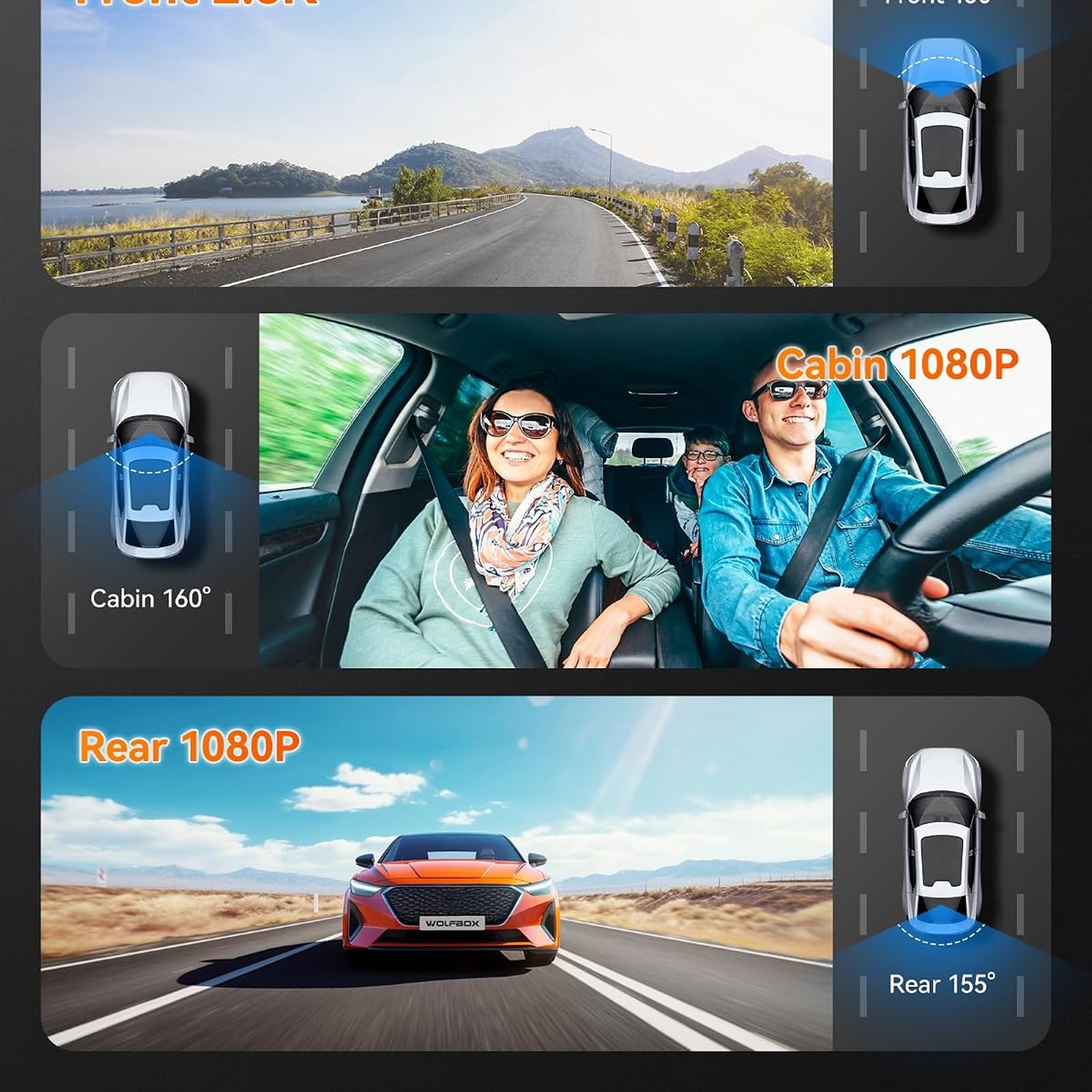
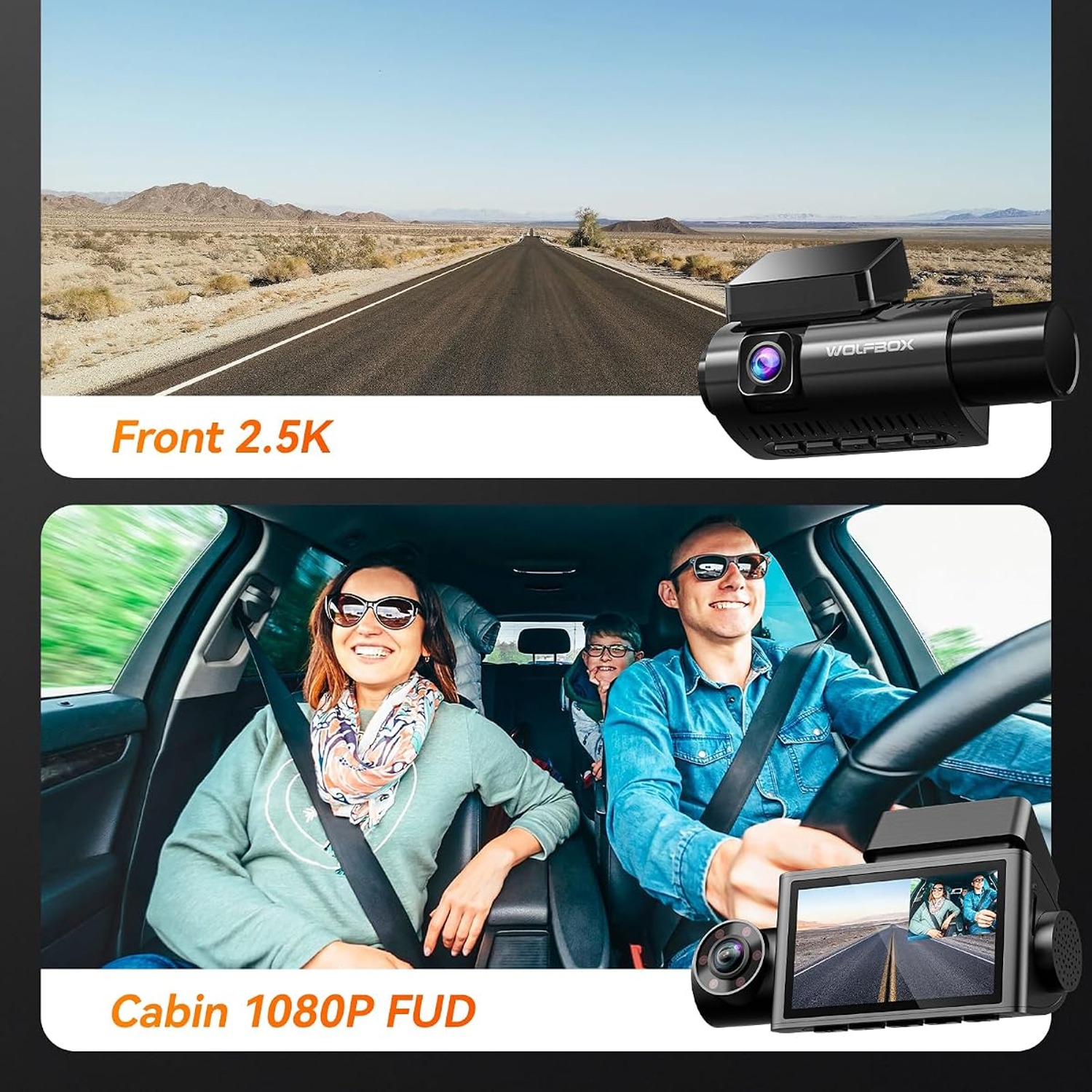
That is why three channel systems became the default for drivers who carry passengers for a living, and increasingly for ordinary commuters too. Three angles, one device, one card, one timeline. When you pull up a clip, you see the road ahead, the people in the car and the traffic behind, all stamped with the same time.
How the WOLFBOX i07 works
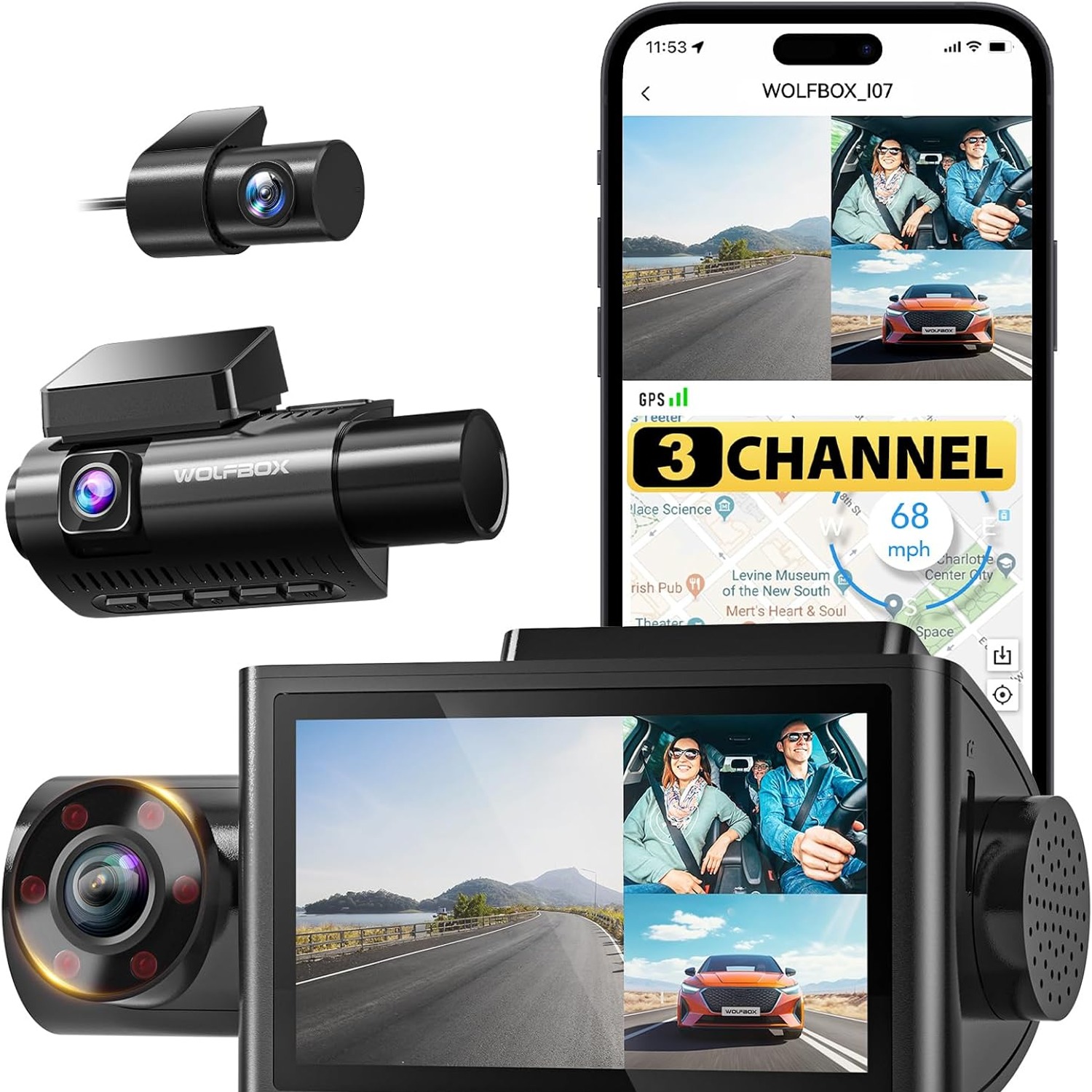
The main unit mounts to the windscreen, usually tucked behind the rear view mirror where it stays out of your line of sight. Inside that body are two cameras. One looks forward through the glass. The other looks back into the cabin. A third camera, on a long cable, mounts to the rear windscreen and looks out behind the car.
The front lens has an f/1.8 maximum aperture and a CMOS sensor, with a listed field of view of 170 degrees and a video capture resolution of 1440p. The wide angle is what lets it pick up vehicles entering from the sides, which is where a lot of intersection trouble starts.
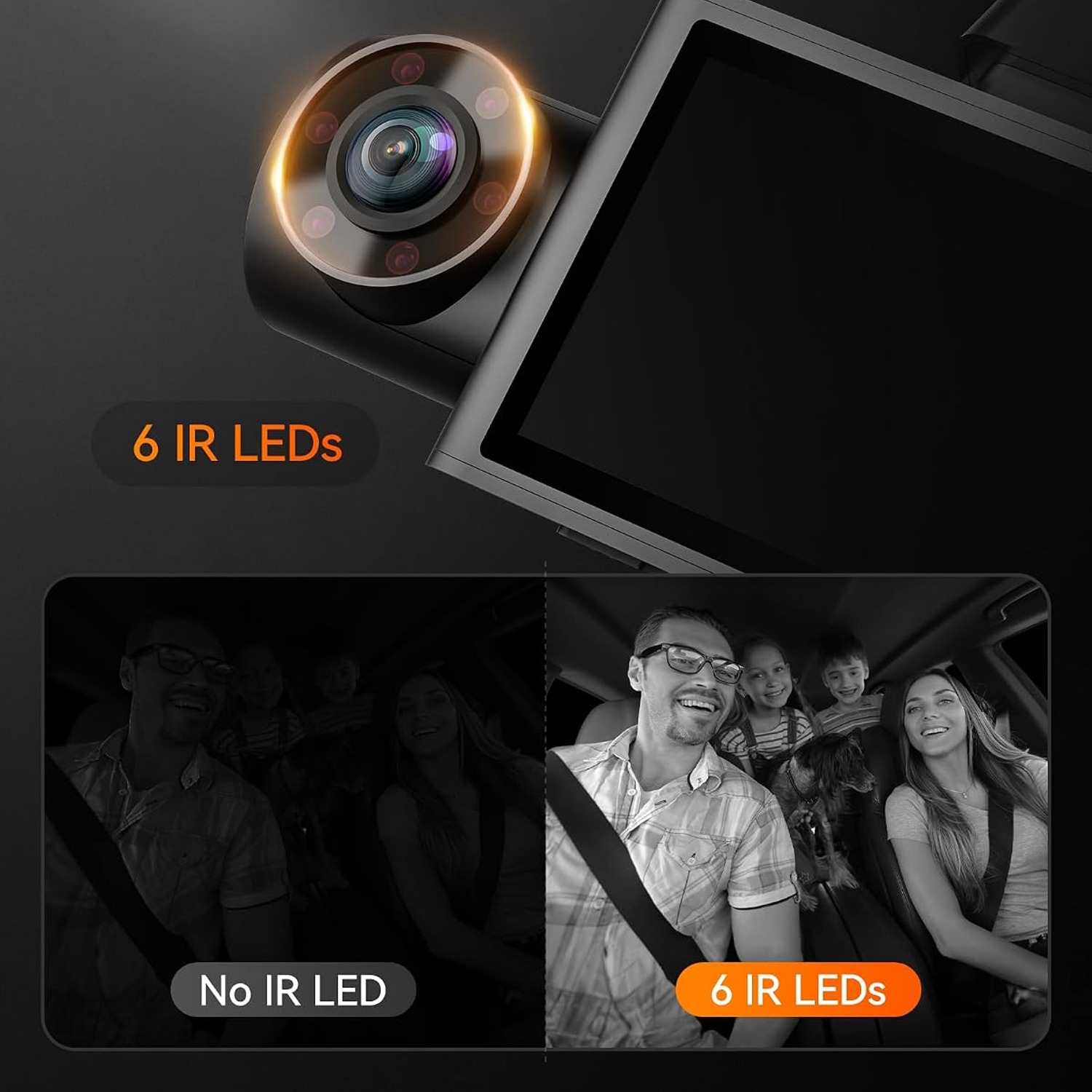
The cabin camera is the one that separates this from a standard front and rear kit. It uses infrared LEDs, which means it can see in a dark car at night or in an underground car park without lighting up the interior. Passengers are not sitting in a glare. The camera just works.
Recording runs in a loop. The camera keeps filming and writes over the oldest unprotected footage as the card fills, so you never need to clear it manually. A G-sensor watches for sudden impacts and locks the file around any jolt it detects, which keeps that clip safe from being overwritten later.
Storage is microSD. A 32 GB card is included and the camera supports cards up to 512 GB. Files are saved as MP4, which plays on anything without special software.
GPS and the phone app
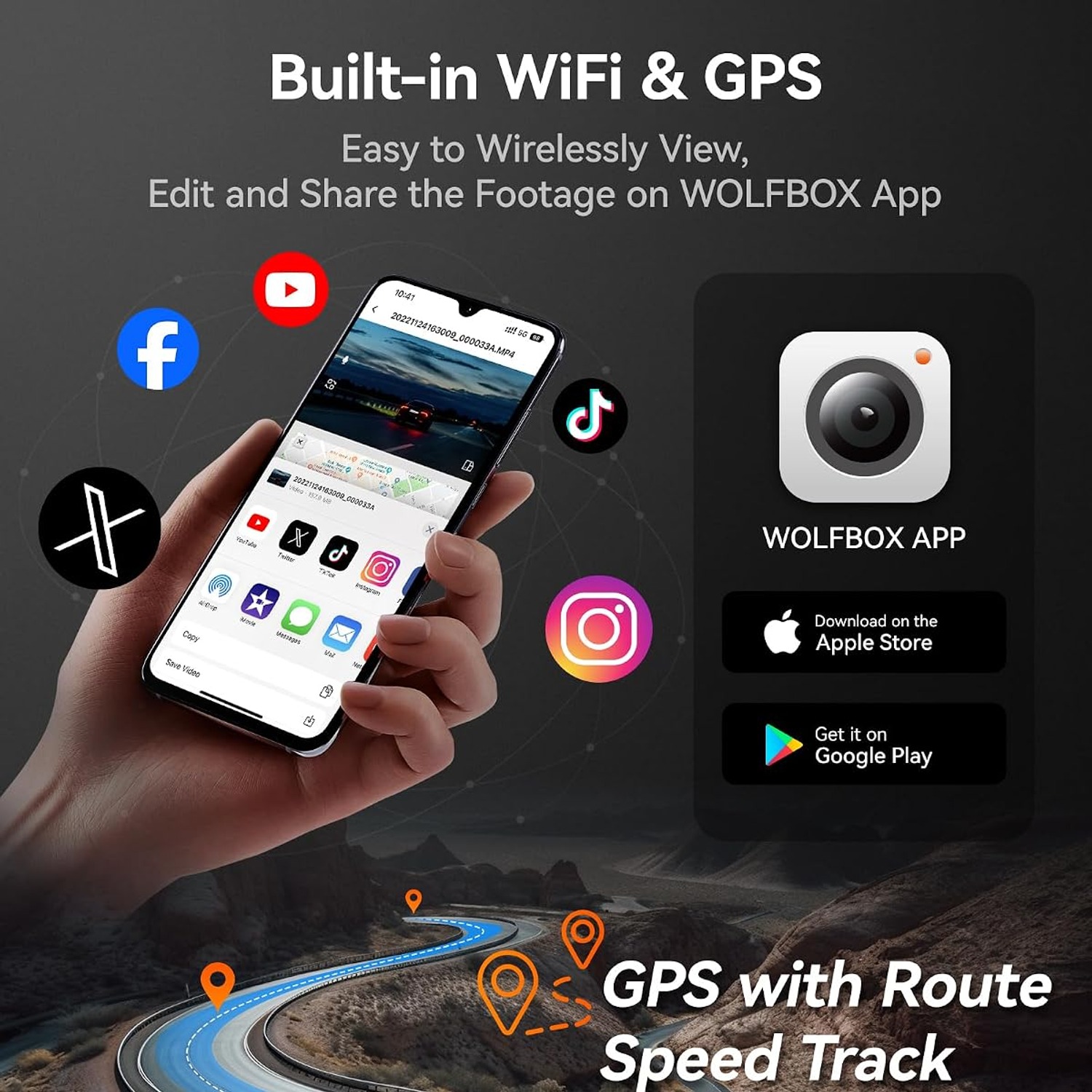
Built-in GPS runs alongside the video and records speed and coordinates. When you play a file back on a computer, that data appears with the footage. It turns a clip into a record with context, and that context often settles a dispute faster than the pictures alone. If someone claims you were speeding, the file shows otherwise.
Wi-Fi handles the day-to-day work. You connect your phone to the camera, open the app, and browse the recordings. Save what you need, trim it and send it straight to your insurer or to the other driver. That is far quicker than digging the card out and finding a reader, and it is the main reason people shopping for the best car camera with app end up on three channel models like this one.
There is also a 3 inch LCD on the unit itself. It matters most at installation, when you are nudging each lens into the right position and checking that all three channels are live. After that it is handy for a quick look at a clip before you have your phone out.
Who it suits
Rideshare and taxi drivers are the obvious group. If you carry strangers, a cabin camera is basic protection for both sides, and the infrared makes it work on the late shift when you need it most. Anyone comparing the best taxi dash cam options will find the interior channel is the deciding feature.
Parents of new drivers are the second big group. Three angles give a clear picture of how a car is actually being driven, and the GPS speed data takes the argument out of it.
Fleet operators and small business owners use them for the same reason, scaled up. A van that visits twelve sites a day collects a lot of risk, and a record of each trip is worth having.
Then there are ordinary commuters who just want to stop worrying about the car park. If your car sits in a public bay all day, impact triggered parking recording is a genuinely useful thing to own.
How to choose and set it up well
Start with the card. This is the single most common point of failure in any dash cam, and it has nothing to do with the camera. A dash cam writes constantly, and a standard photo card is not built for that. Buy a high endurance microSD card rated for continuous recording. The included 32 GB card gets you going, and moving up to a larger card simply means more history before the loop overwrites.
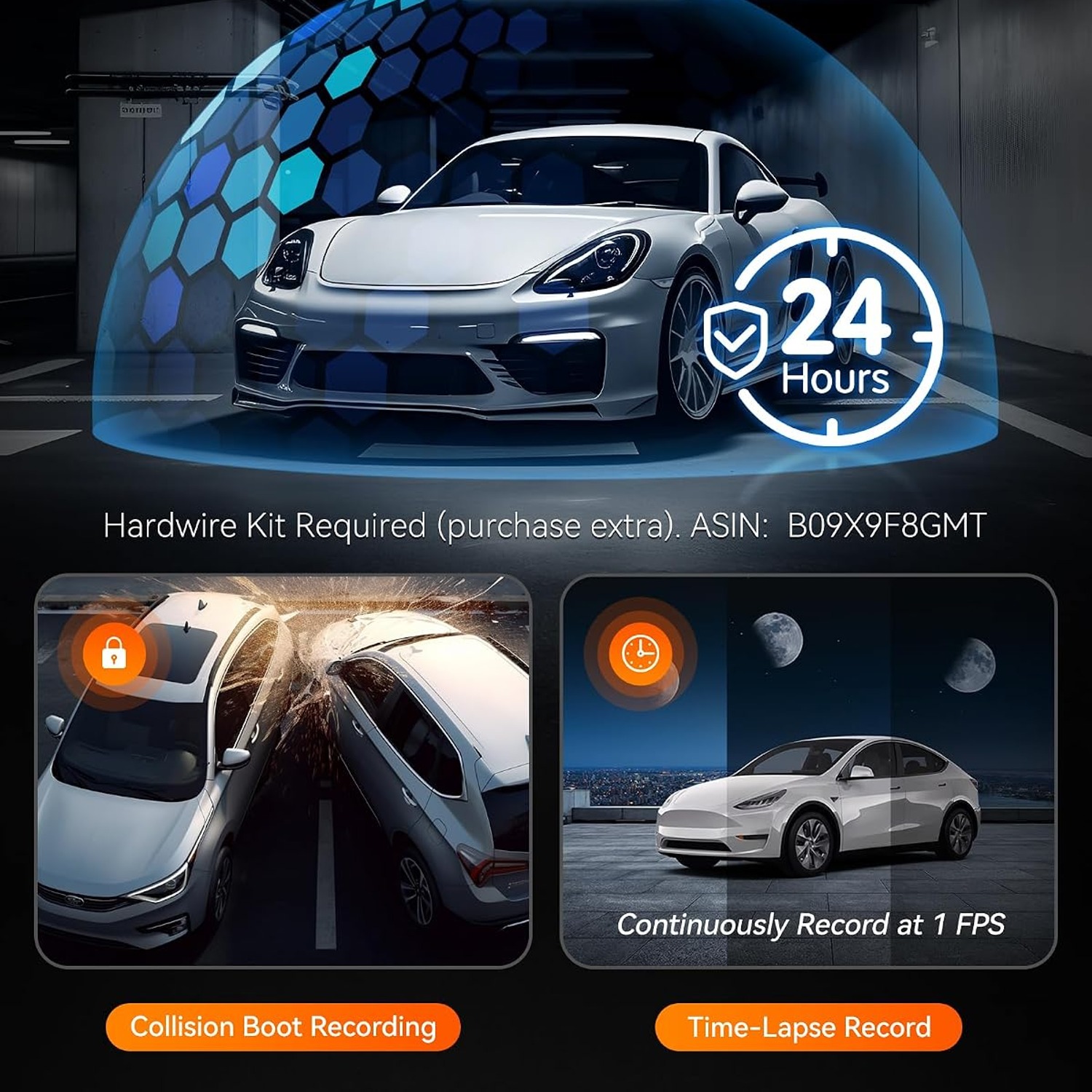
Think about power next. For normal driving, the Type-C cable into a vehicle outlet is all you need. But if you want parking surveillance, the socket usually dies when the ignition is off. You will need a hardwire kit connected to the fuse box, which is what enables both the impact triggered mode and the time-lapse mode. A hardwire kit is a separate purchase and many people have an auto electrician fit it in under an hour.
Placement is worth a few minutes of care. Mount the main unit high and central, right against the mirror, so it does not block your view. Run the rear camera cable along the headlining and down the pillar trim rather than letting it hang. Angle the front lens so the horizon sits roughly a third of the way down the frame, which gives you road detail without wasting half the picture on sky.
Check your local rules before you commit. Windscreen mounting regulations, audio recording consent, and passenger notification requirements all vary. In many places a small sticker in the cabin covers the notice requirement, and it takes two minutes to apply.
Keeping it reliable
Dash cams are low maintenance, but they are not zero maintenance. Wipe the lenses with a microfibre cloth every so often, since a film of dust on the glass softens the whole image. Avoid touching the lens surface with your fingers.
Format the card in the camera every few weeks. This clears accumulated file fragments and keeps the write performance steady. It is the single habit that prevents most of the "my camera stopped recording" complaints. If you start seeing errors after a format, replace the card rather than the camera.
Heat is the other thing to manage. This unit uses super capacitors rather than a lithium battery, a design choice that handles high cabin temperatures better. Even so, park in shade where you can, and avoid pulling cables tight across sun-baked glass.
The short version
A three channel dash cam gives you the forward view, the cabin view and the rear view on one timeline. The WOLFBOX i07 does that from a compact 143 g body with a 3 inch screen, 1440p capture, a 170 degree field of view, built-in GPS and Wi-Fi for phone transfers. The infrared cabin camera is what makes it genuinely useful for rideshare, taxi and anyone who regularly carries passengers after dark.
Fit a high endurance card, mount it behind the mirror, and add a hardwire kit if you want parking protection. Then forget about it until the day you need the footage, which is exactly how a dash cam should work.