
The complete guide
How to Choose a Travel Tripod That You Will Actually Carry
The problem with holding your camera
Nearly every disappointing photo has the same cause. The light got low, the shutter slowed down, and your hands moved a fraction of a millimetre while the sensor was still collecting the image. You cannot feel it happening. You only see it later, when you zoom in and the edges look soft and smeared.
The same thing shows up in video as a constant small wobble. It is the quickest way to make footage look amateur, even when the content is good. And if you are the one in front of the camera, holding it is not an option at all. You need something to put the camera on.
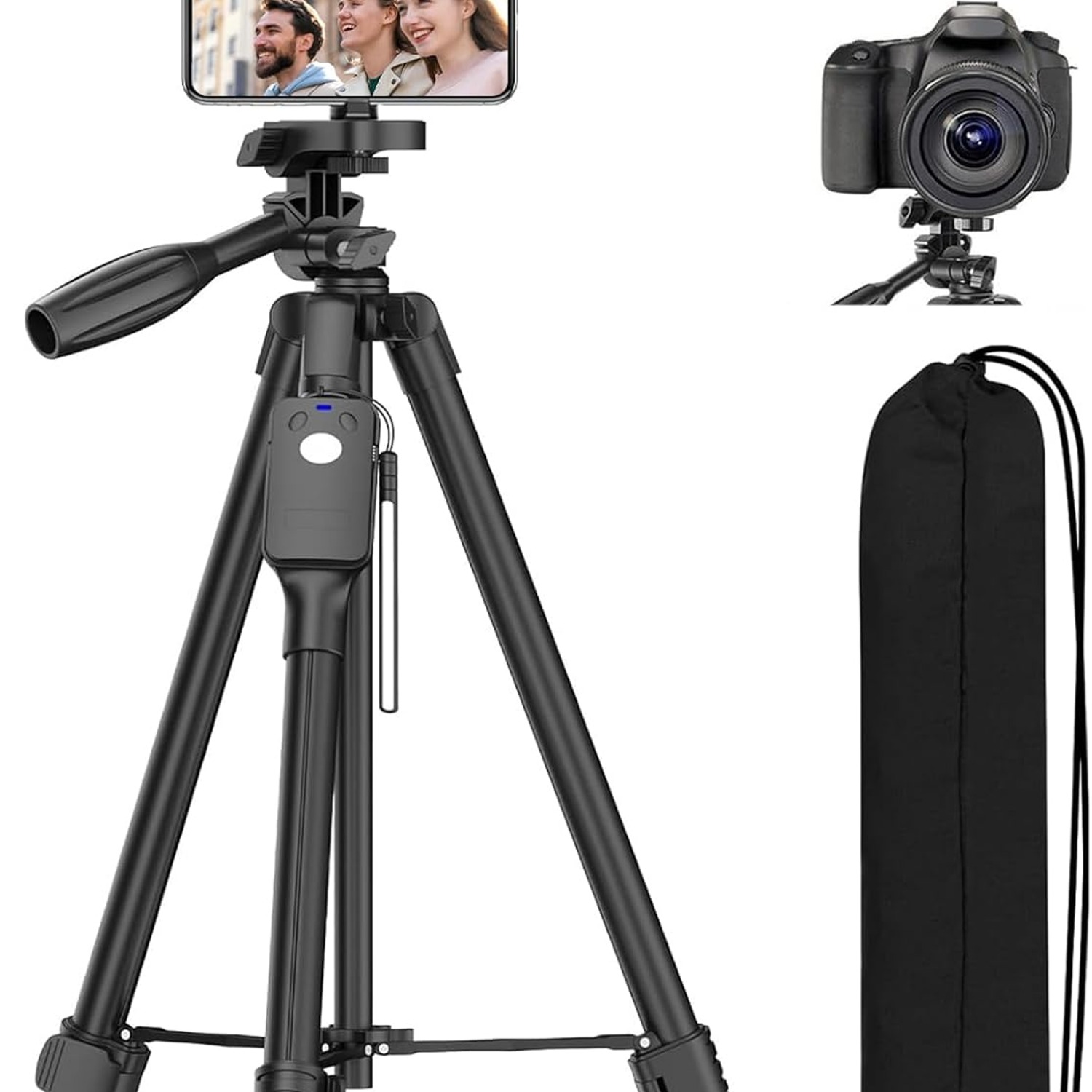
That is the whole job of a tripod. It takes your hands out of the equation and holds the camera in exactly the position you chose, for as long as you need. Everything else is a question of how tall, how heavy and how easy it is to carry.
How this one works
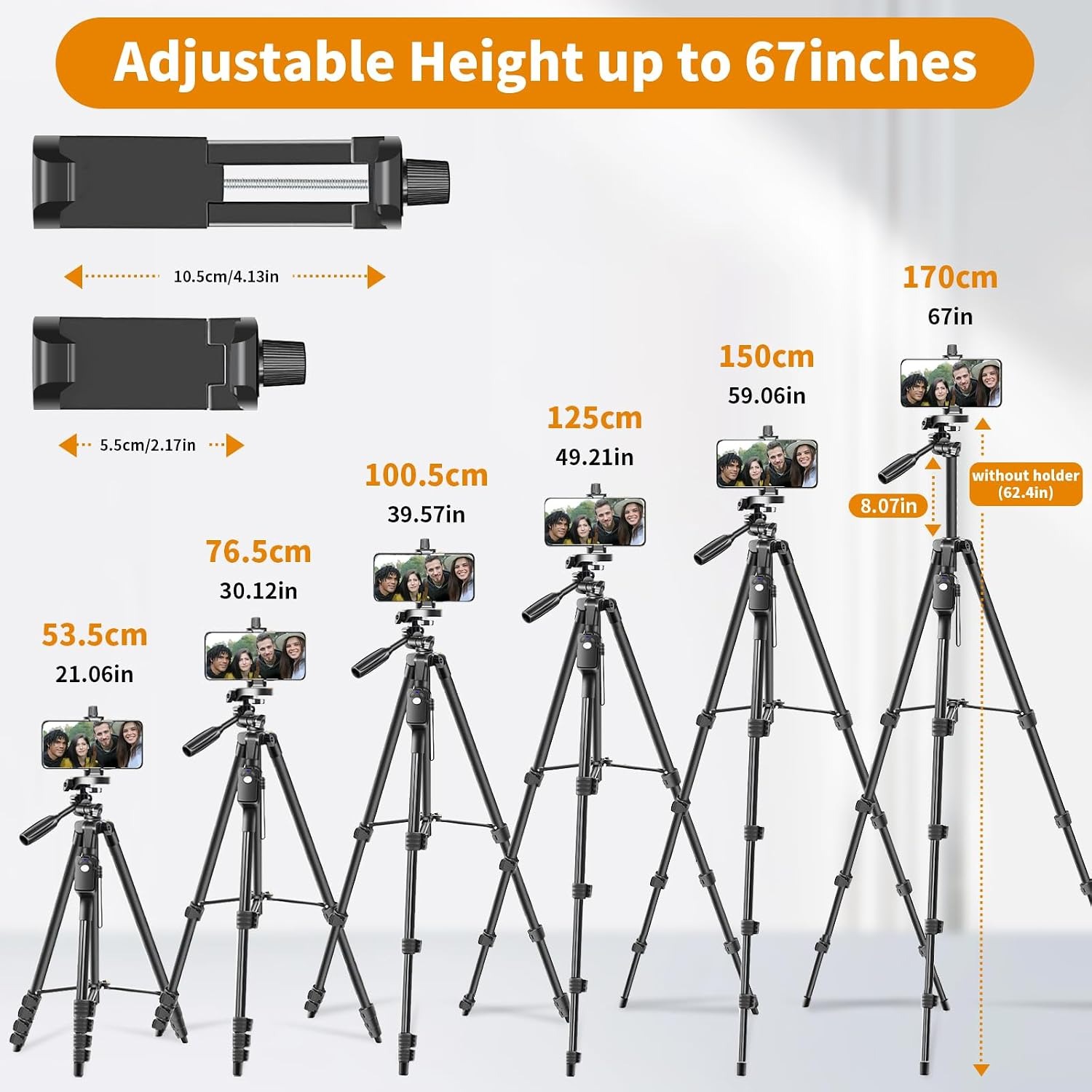
The tripod extends in two ways. Each leg has three sections that slide out and lock with flip clamps, and there is a centre column that raises the head further. Fully out, you get 170cm, which is 67 inches, measured with the phone mount in place. Pull the phone mount off and the top of the mounting screw sits at about 62.4 inches.
At the other end, collapse the sections and spread the legs wide and you are down to 53.5cm. That low position is where a lot of interesting photos live. Shooting a toddler, a dog or a plate of food from adult eye height always looks slightly detached. Drop to their level and the picture changes completely.
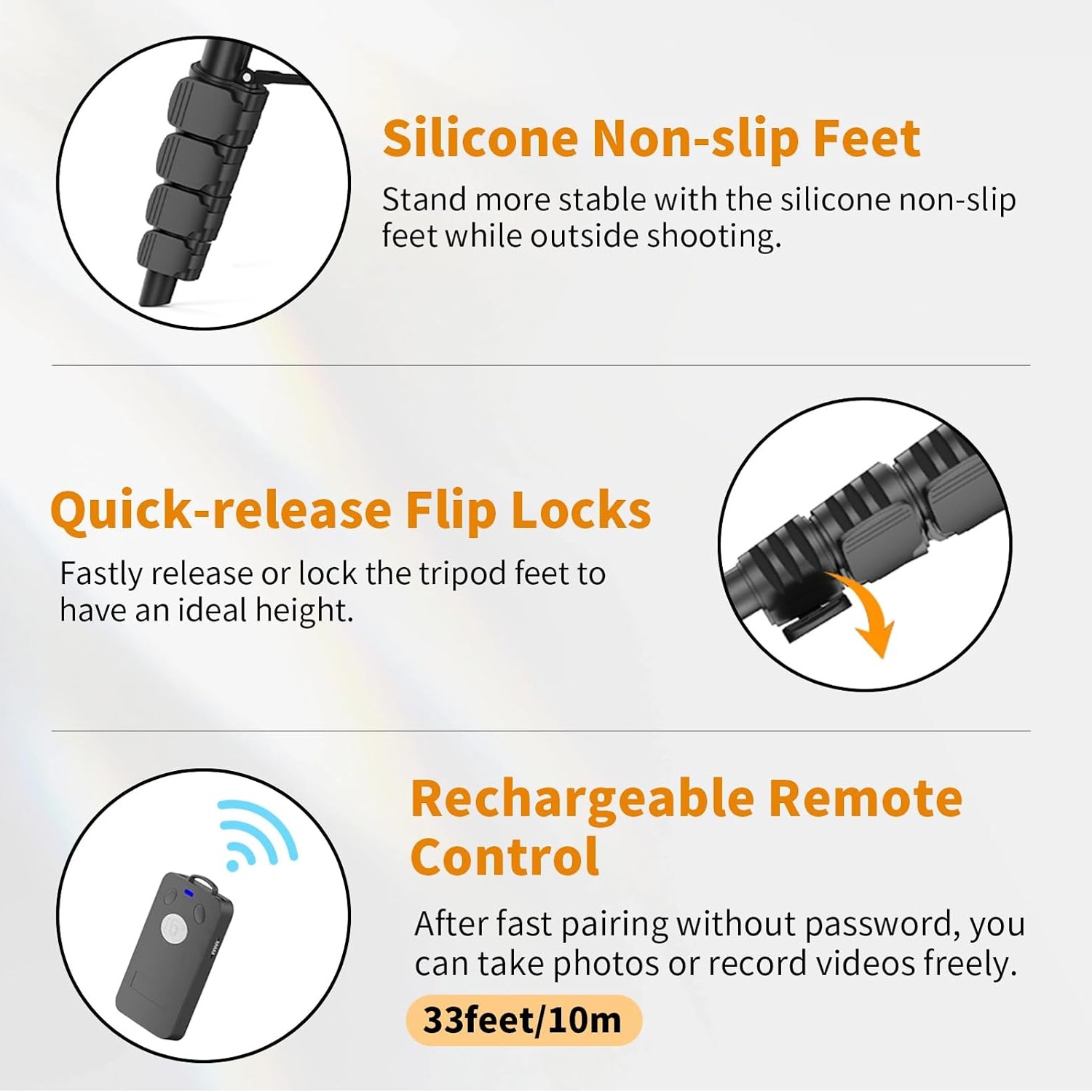
Flip locks are worth mentioning because they shape how the tripod feels day to day. You open a clamp, pull the section out, and snap it shut. You can see at a glance whether every leg is locked, which you cannot always do with twist collars. For run-and-gun shooting, that visual check saves you from the sickening moment when a leg slides down with a camera on it.
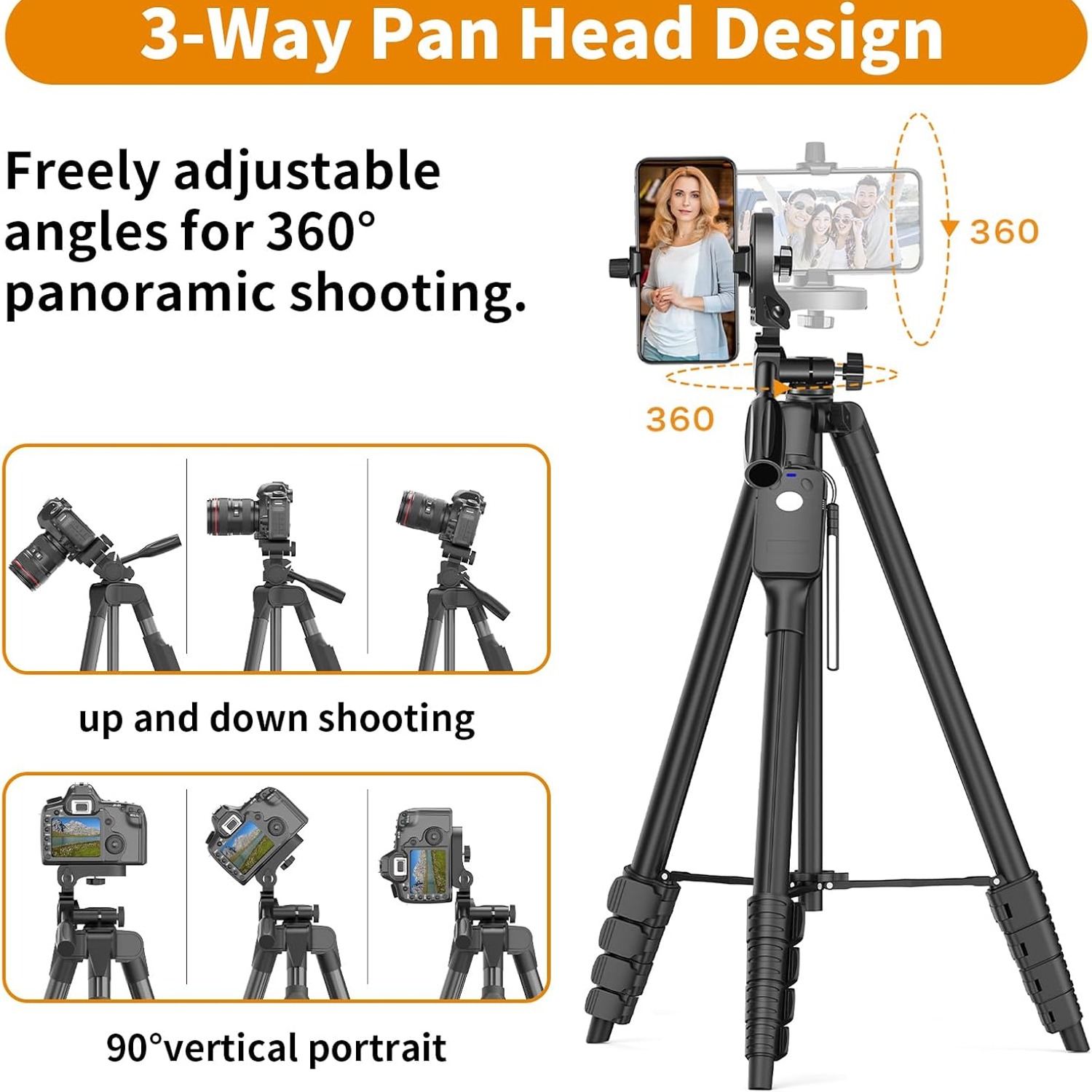
The head is a 3-way pan design. The handle tilts the camera up and down, the base swivels through a full 360 degrees, and the plate rotates 90 degrees so the camera stands on its side. That last movement is what gets you vertical video without cropping a horizontal frame and throwing away half your pixels.
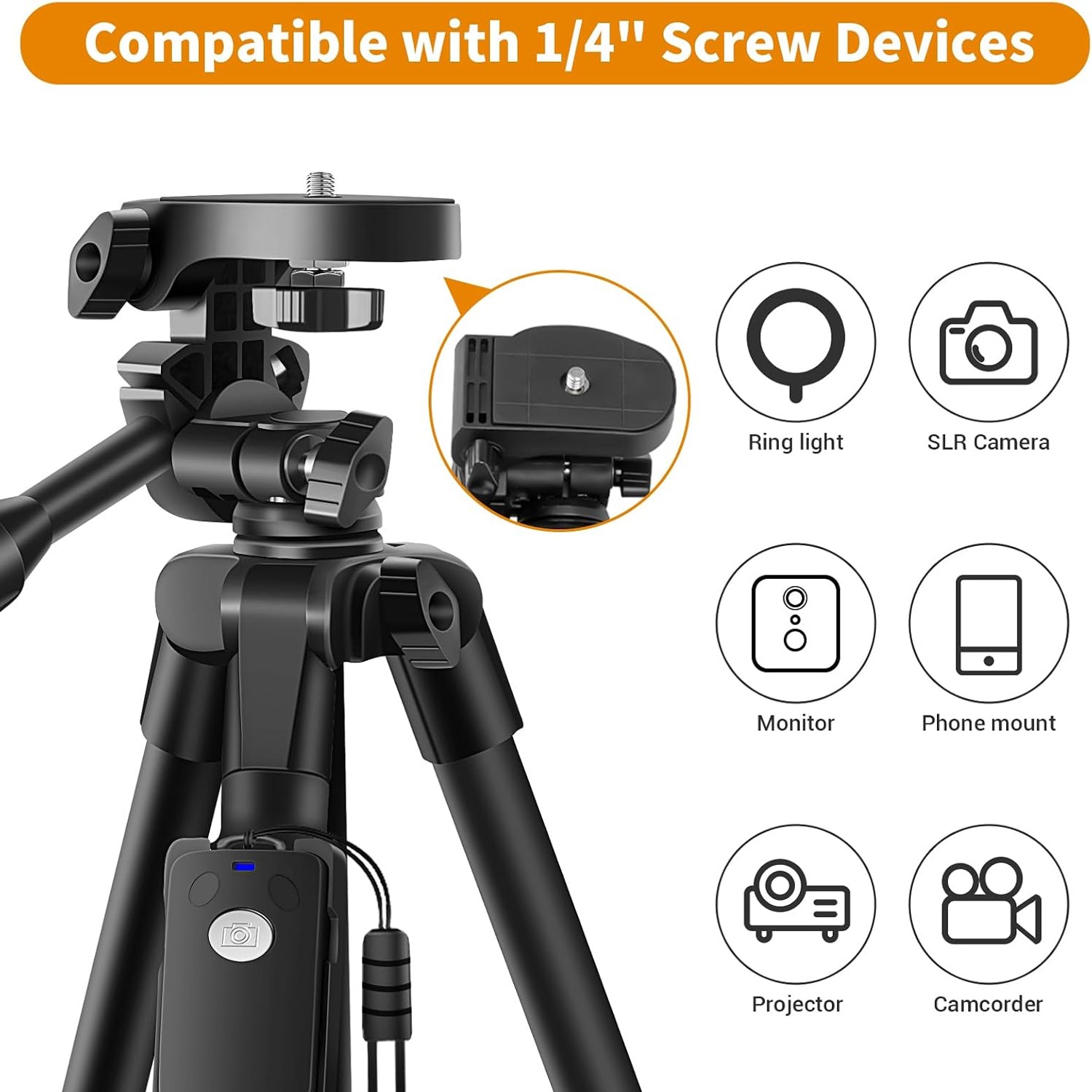
Holding it all together is a standard 1/4 inch screw. That thread has been the camera industry's common fitting for decades, so if your device has a tripod socket at all, it almost certainly matches. The detachable phone mount screws onto the same thread and clamps handsets between 4 and 7 inches.
The remote matters more than you think
A wireless remote sounds like a small extra until you use one. It pairs with your phone without a password and reaches about 10 metres.
For a solo creator, that is the difference between being in frame and not. You set up the shot, walk into it, and start recording from where you are standing. No sprinting back after hitting record. No awkward first ten seconds of footage that you have to trim.
For stills, it removes the last source of shake. Pressing a shutter button, even gently, nudges the camera. A remote means nothing touches the rig at the moment of capture, which is exactly what you want for long exposures at dusk.
The battery charges in roughly 20 minutes and runs for about 20 hours of use. Realistically that means you charge it before a trip and forget about it. There is a slot built into one of the legs where the remote clips in, which solves the usual problem of tiny accessories vanishing.
Who this suits
Think about the 3kg limit first, because that is the honest dividing line. A phone weighs a couple of hundred grams. A mirrorless body with a kit lens is typically under a kilo. A mid-range DSLR with a standard zoom usually lands between one and one and a half kilos. All of those sit well inside the rating.
Where it stops being the right tool is heavy professional bodies paired with long telephoto glass. A 70-200mm f/2.8 on a full-frame body can push past 3kg on its own, and that kind of setup wants a heavier tripod with a chunkier head. Not because this one would collapse, but because the whole point of a tripod is rigidity, and an overloaded frame flexes.
Beyond cameras, the 1/4 inch thread opens up other uses. Webcams, small portable projectors, ring lights, spotting scopes and binocular adapters all mount the same way. People buy one of these for photography and end up using it half the time to hold a webcam at eye level for video calls.
Tablets are the exception. The phone mount is not built for them and a tablet would not clamp safely.
Choosing a travel tripod in general
There are really only four things to compare, and they trade against each other.
Height determines whether you can shoot standing at a natural eye level or whether you are always stooping. A tripod that tops out at 120cm sounds fine on paper and gets annoying within a day. 170cm covers most adults comfortably.
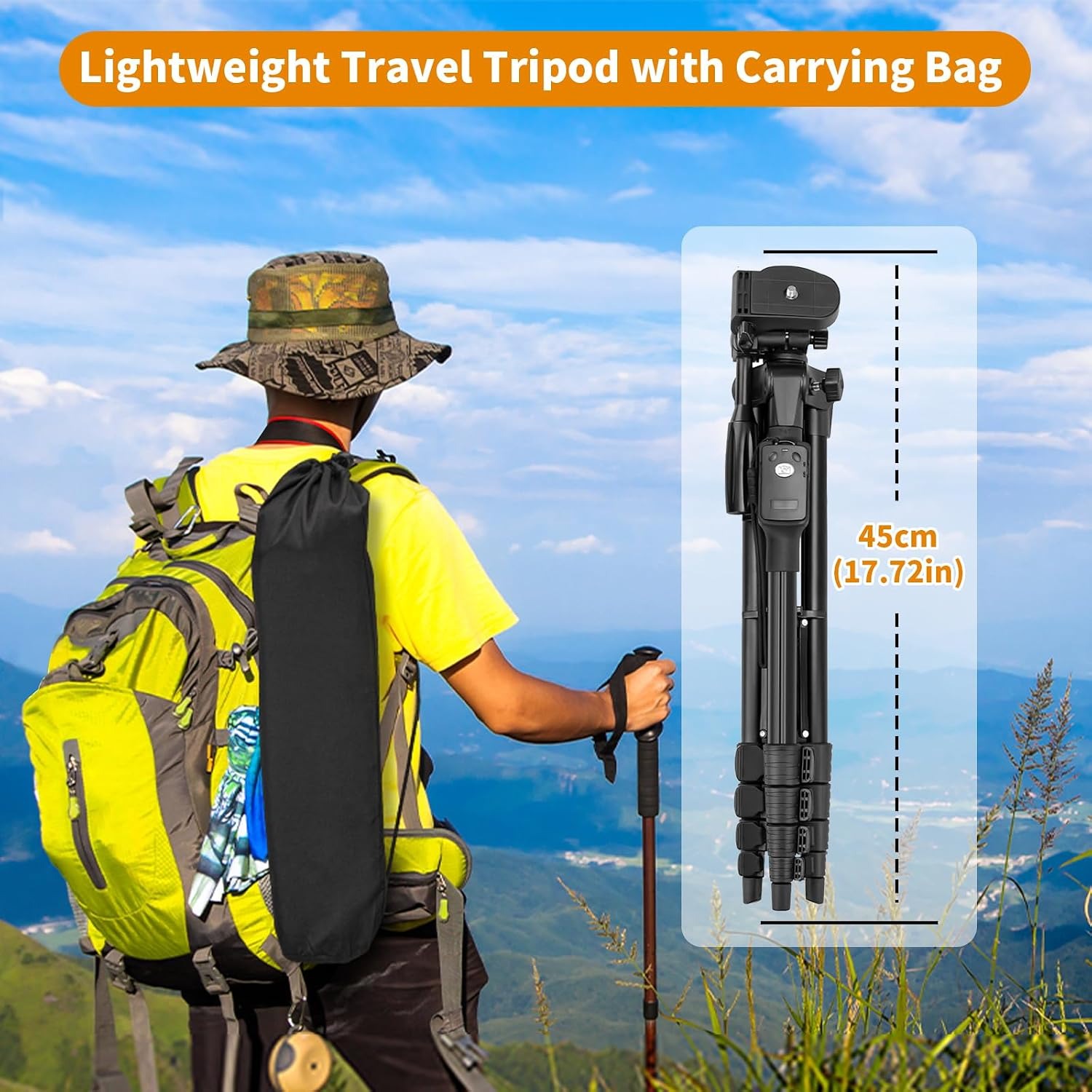
Folded length decides whether it comes with you. At 45cm this folds short enough for a backpack and a carry-on. A tripod that folds to 65cm is technically portable and practically stays at home, which makes it worth nothing.
Load rating tells you what you can safely put on top. Always leave headroom. A tripod running at its absolute limit is a tripod that vibrates.
Material is the last piece. Aluminium is strong, affordable and takes knocks without complaint, which is why most tripods in this bracket use it. Carbon fibre shaves off weight and damps vibration slightly better, at a considerably higher price. For most people the aluminium version is the sensible buy.
Getting the most stability out of it
A few habits make any tripod steadier. Extend the thickest leg sections first and leave the thin bottom sections retracted if you can, since the wider tubes flex less. Use the centre column last, because raising it puts your camera on a single narrow pole above the stable triangle.
Spread the legs wide on uneven ground and set each one at a different length so the head sits level. Check the rubber feet are flat on the surface rather than balanced on a stone.
On a windy clifftop, lower everything, widen the stance and hang your camera bag off the centre of the tripod to add mass. If there is a strap on your camera, tuck it away so it is not flapping like a sail.
Looking after it
Tripods are simple, and they fail for simple reasons. Sand and grit get into the leg sections, scratch the tubes and chew through the clamps. If you shoot at the beach, rinse the legs with fresh water afterwards and let them dry fully before folding them away.
Wipe the head and legs with a dry or slightly damp cloth after normal use. Before long storage, release the flip locks so the clamps are not sitting under tension for months. Every so often, check the mounting screw has not worked loose.
The travel bag does more than carry the tripod. It keeps the legs from snagging and stops the metal scratching lenses in a shared bag.
The short version
This is a 170cm aluminium tripod that folds to 45cm, holds up to 3kg, and comes with a phone mount, a 3-way pan head and a wireless remote that reaches 10 metres. It suits phones, compact and mirrorless cameras, lighter DSLRs, webcams, ring lights and small projectors.
If you shoot handheld now and your photos are nearly good, this is the piece that closes the gap. If you are carrying a heavy pro body and a long lens, look at something built for that weight instead. And if you need to be in your own footage, the remote alone is worth the setup.